
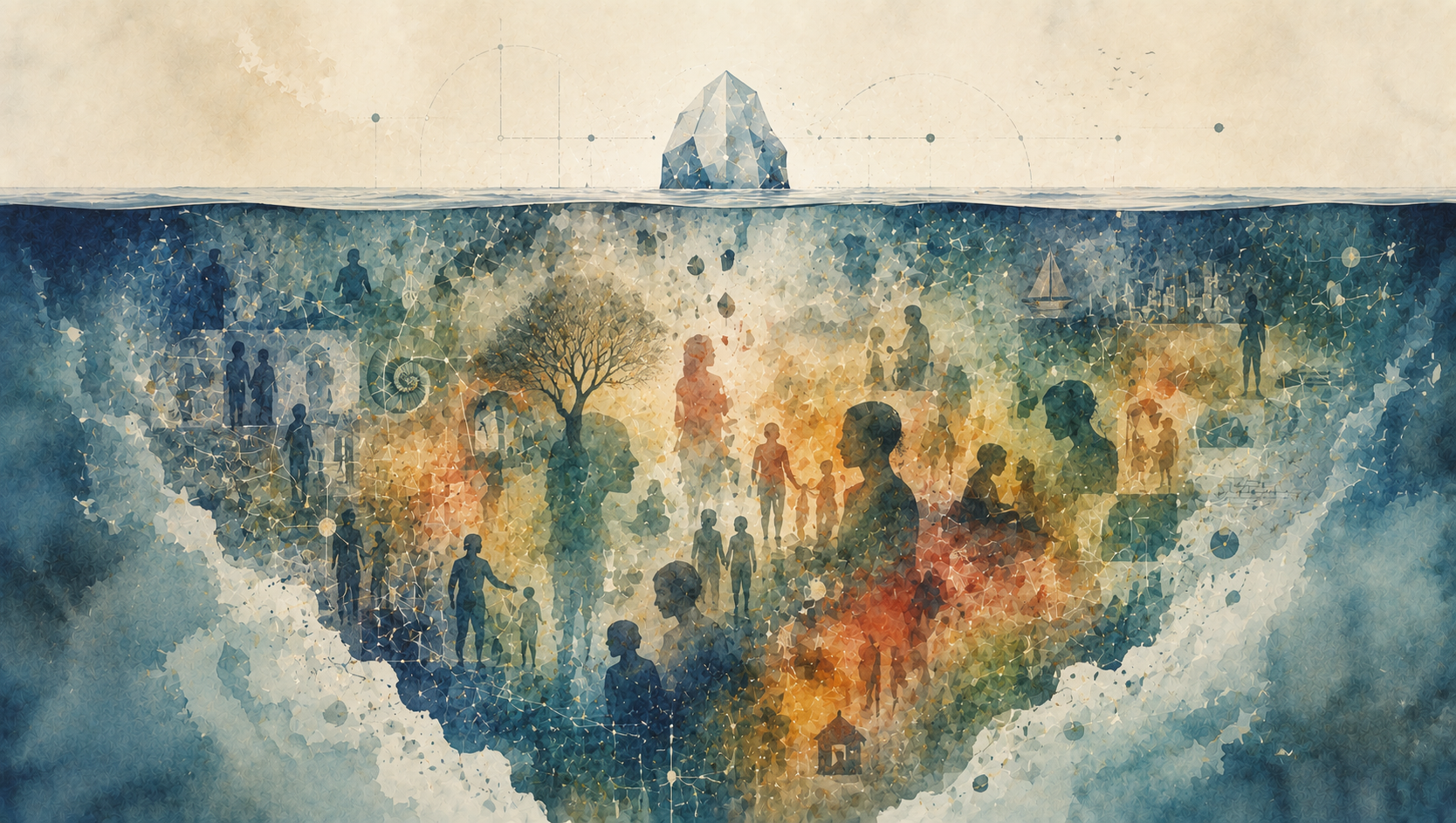
I have just watched a recently aired documentary about ADHD, and I have to admit that I am almost afraid to mention its name. Not because I don't have an opinion about it. Quite the opposite. I have a lot to say.
The documentary made some valid points. It raised important questions about diagnosis, the increasing use of psychiatric labels, the role of pharmaceutical treatment and, perhaps most importantly, about the way we understand human behaviour.
Throughout the programme, I found myself becoming increasingly uncomfortable with the apparent certainty of some of the conclusions. There is an important distinction between questioning a diagnosis and dismissing the experience of the person who has been given it.
And that distinction matters enormously to those of us who work therapeutically with people. And those of us who live with a diagnosis.
Diagnosis is a construct. That doesn't make it meaningless.
One of the arguments made in the documentary appeared to centre around the fact that ADHD cannot be demonstrated through one definitive brain scan. This is presented as though it somehow proves that ADHD isn't real. Brain scans may produce highly detailed images, but the interpretation of those images is still a human process and is therefore not entirely free from subjectivity.
There is currently no single brain scan that can definitively diagnose depression. Or anxiety. Or schizophrenia. Or bipolar disorder. Or a personality disorder. The argument overall is a strange standard to apply to psychiatry.
Psychiatric diagnosis is, by its nature, constructed through patterns of experience, behaviour, history and clinical judgement. The diagnostic manuals provide frameworks for organising those patterns. They don't provide a photograph of an illness sitting inside somebody's brain.
This is one of the uncomfortable truths about diagnosis more generally: diagnostic categories are human constructions designed to help us describe, communicate about and respond to patterns of difficulty.
That doesn't mean they are imaginary. It means they are models, created out of observations. And models can be useful without being a whole reality.
Current clinical guidance reflects this complexity. There is no single test for ADHD; assessment involves considering symptoms, developmental history, functioning and information from different settings and people. Clinicians are also expected to consider other explanations and co-occurring conditions. This seems to me a much more honest position than either extreme. The absence of a definitive scan doesn't mean that the difficulties experienced by somebody with ADHD are somehow fabricated. The person's experience is real even when the diagnostic category is constructed.
I find this particularly interesting when we look beyond ADHD. Take dyslexia — a diagnosis I received as an adult. I have struggled with handwriting, forming letters and processing written information throughout my life. After many years of personal development, extensive therapeutic training and a great deal of self-understanding, I can say with considerable confidence that my dyslexia is not behavioural.
I didn't fail to learn to process written information because I wasn't trying hard enough. I didn't struggle with handwriting because I had developed a bad attitude towards writing. And I can assure you that being told to try harder at school did not change the way my brain processed written information. I tried. I really tried.
The same questions arise in relation to autism and other neurodevelopmental differences.
We can observe neurological differences associated with things such as language, sensory processing, attention and executive functioning in research. But we cannot currently put an individual person into a brain scanner and obtain a definitive biological explanation for their particular experience.
If somebody is non-speaking, for example, is that simply a behavioural choice? If somebody experiences profound sensory differences, difficulties with executive functioning, or processes information in a fundamentally different way, is it helpful to reduce all of this to behaviour? Do none of these really exist without a definitive brain scan to confirm them?
Of course behaviour matters. But behaviour is communication. And behaviour is also adaptation. It was disappointing to note the distinct lack of therapeutic perspective within the documentary, because therapeutic thinking has something important to contribute to the conversation.
What if the behaviour is the solution?
One of the things I find myself asking again and again in therapeutic work is: What if this behaviour makes sense? It's not for me to decide whether a behaviour is acceptable. I want to know what purpose a behaviour is serving. Whether it is currently, or has the potential to be, harmful? And if so, how can I support this person to make the changes they want and need to make.
A person who constantly moves may be regulating themselves. A person who avoids a particular environment may be overwhelmed by it. A person who appears oppositional may be communicating distress, exhaustion, fear or a profound sense of failure.
A person who procrastinates may not be lazy. They may be experiencing inertia, struggling with initiation, overwhelm, perfectionism or the emotional consequences of repeated experiences of not being able to do something in the way others expect of them. Not meeting societal expectations doesn't make a behaviour wrong. Or a person inept. And sometimes what is flippantly assumed to be a problem, is actually a person's best available solution to a challenge we haven't yet understood.
This doesn't mean that every behaviour should be excused. It means that before attempting to change behaviour, we need to get curious about it.
The danger of removing coping strategies
This brings me to the part of the documentary that I found most troubling. The family of the child featured in the programme were encouraged to remove existing coping strategies before alternative strategies had been properly established.
The professionals reportedly warned them that the process would be extremely difficult, that withdrawal symptoms would occur and that the family would struggle. My immediate response was "Then don't do it like that!". This response came from years of experience working within mental health, supporting a great many people through a process of change, with a strong emphasis on ethical approaches.
If a person has developed a way of managing themselves, however imperfectly, removing coping strategies without first understanding their function (and developing alternatives) has the potential to cause harm. In my world that's unethical.
This is not an argument against change. It is an argument for compassionate change.
In therapeutic work, we wouldn't ordinarily expect somebody to relinquish an established coping strategy simply because we had decided it was maladaptive. We would want to understand what it has been doing for them.
We would support the person to develop alternatives. Help them to strengthen their resources and to understand themselves to a greater depth. Often, when this process is upheld with empathy and encouragement, old strategies will naturally become less necessary. And the person remains wholly autonomous throughout.
Who are you underneath the story you have been told about yourself?
A diagnosis can be enormously liberating.
For some people, receiving an ADHD diagnosis is the first time their life makes sense. It can replace years of shame with understanding. It can provide language for experiences that previously felt inexplicable. It can open doors to support and reasonable adjustments.
I am not suggesting that medication has no legitimate or valuable place in the treatment of ADHD. Contemporary clinical guidance recognises both non-pharmacological approaches and medication as potential parts of ADHD care, depending on the individual and their circumstances.
What I am wary of is certainty becoming ideology. Because once we become certain that we already know the answer, we leave very little room for curiosity.
People are messy. Human beings are inconsistent. Our brains are complicated. Our histories matter. Our environments matter. Our relationships matter. Trauma matters. Genetics matter. Education matters. Sleep matters. Stress matters. Sensory experience matters. Family systems matter. Culture matters.
I have no interest in replacing one rigid belief system with another. I don't want to live in a world where every difference is pathologised. But I also don't want to live in a world where somebody's very real difficulties are dismissed because we have decided that the diagnostic category used to describe them is imperfect.
I am pro-human, pro-compassion, pro-self-awareness, pro-choice and pro-curiosity. And I am pro the idea that people deserve the opportunity to understand themselves without having to surrender their complexity in exchange for a diagnosis.
Our professional qualifications matter. Training, evidence and clinical competence matters enormously. But having letters after our names does not give us ownership of another person's experience. Especially when we are working therapeutically, we need to remain humble enough to recognise that we are meeting a person whose inner world can never be completely captured by a diagnostic manual.
People's experiences are not a myth. They are lived, complex and deeply personal. Professional expertise should never be used to make someone's world smaller. It should help make more of it possible.
Lucy-Mai McCann, thereparatory.co.uk, August 2026
