

"That's me. I'm just a useless old shipwreck," said my client whilst observing the images he had selected during a therapeutic activity. An activity designed to reveal processes beneath conscious awareness. This is a client I would describe as highly successful, deeply insightful, creative and compassionate with a joyous energy.
I felt a deep sadness, knowing how hard he had worked to lead a meaningful life, and still he believed he was useless. My job was to challenge that truth, to work with my client to find his value, his purpose. And I knew sadness could be the catalyst for change . . . when we truly connect with our sadness it takes us to a place of deep reflection, where we can find the parts of ourselves that have been neglected. From there we can choose to envelop our whole selves in kindness and love.
The Shipwreck
There are storms that announce themselves with thunder. And there are storms that arrive quietly, slipping into a person's life like rising water in the dark. Mental health struggles are often the second kind.
From the outside, all may seem well. The person still goes to work. Still answers messages. Still takes the kids to the park. But beneath the surface, the hull is splitting apart plank by plank. Anxiety tears holes below the waterline. Depression clouds the compass. Trauma fractures the mast. Slowly, invisibly, the ship begins to sink. For those who have never stood in those waters, it can be difficult to comprehend the exhaustion of trying to stay afloat.
There is a particular loneliness that comes with mental health struggles. Not just sadness, but isolation, the belief that nobody else could possibly understand the chaos inside your head. Or that you're not worth caring about. Days blur together. Nights stretch endlessly. Thoughts circle like gulls over wreckage. You may begin to wonder whether rescue was ever real, or just a story told to comfort the drowning.
Yet, time and time again, people survive.
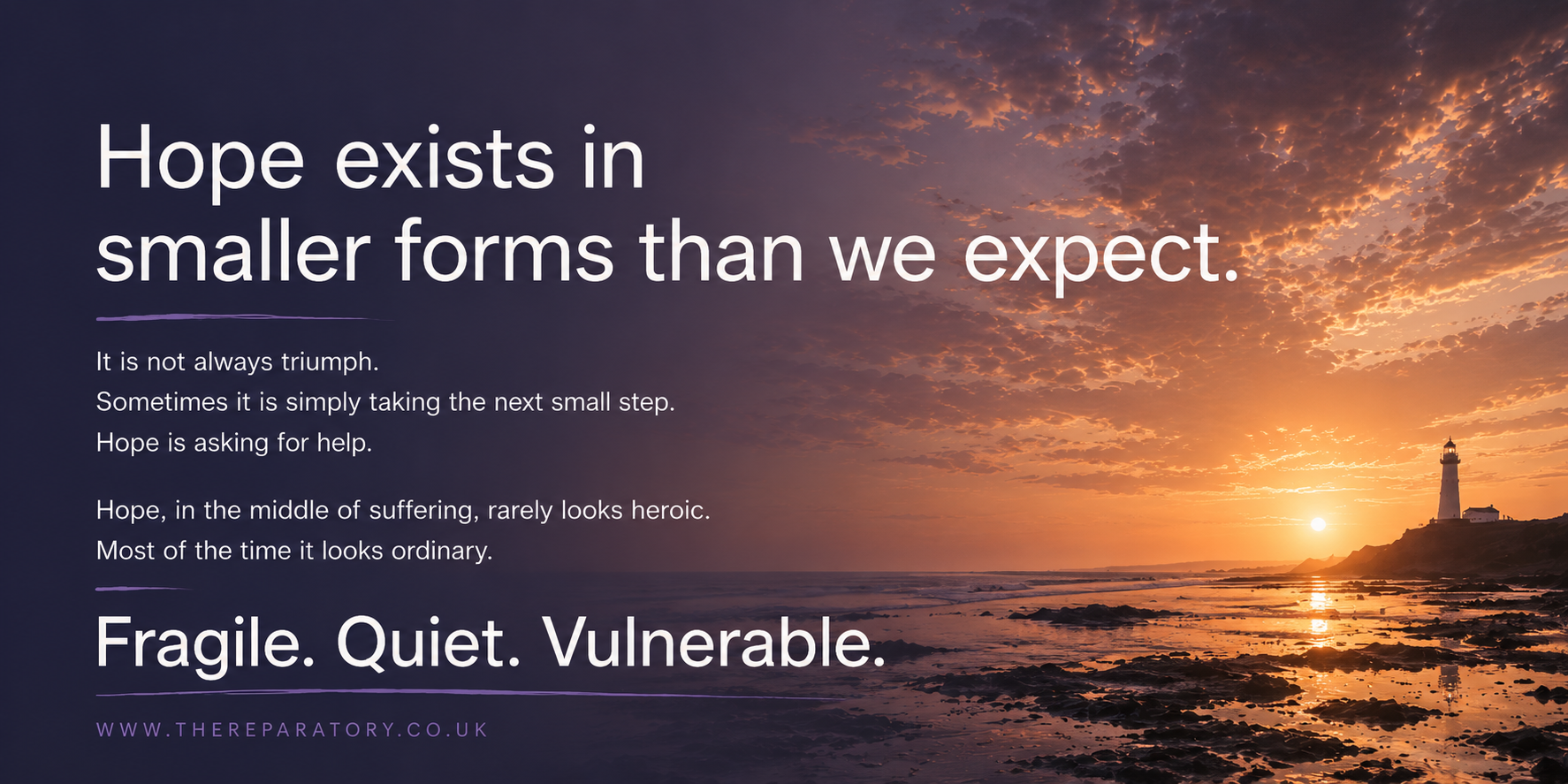
The stubborn truth of human beings is that, even in absolute darkness, we search for light. A person at their lowest may not feel hopeful in the grand, cinematic sense. Hope exists in smaller forms than we expect. It is not always triumph. Sometimes it is simply taking the next small step. Hope is the decision to get out of bed when your mind begs you not to. It is texting a friend. It is making toast. Taking medication. Opening the curtains. Breathing through another panic attack. Hope is asking for help. Hope, in the middle of suffering, rarely looks heroic. Most of the time it looks ordinary. Fragile. Quiet. Vulnerable.
But quiet things can still save lives.
Like a shipwreck, some storms change the structure permanently. Certain losses cannot be undone. There may be memories that leave salt in the wood forever. But out of the wreckage, survivors learn something remarkable: resilience grows even in dark places. Human beings adapt. They improvise rafts from debris. They learn to navigate by stars they never noticed before. And most importantly, they discover they were never alone in the water.
Those who endure severe mental health struggles often emerge with a deeper compassion for others. They recognise pain in subtle gestures. They become gentler listeners. More patient friends. They understand that people are fighting unseen battles.
Suffering does not automatically make someone wiser or stronger. Sometimes suffering simply hurts and there is no neat and tidy ending to conversations about mental health. Recovery is rarely linear. Some days the sea is calm. Other days the waves return without warning. But even then, hope persists. Even if another person needs to hold the baton of hope for a while on your behalf. A lighthouse does not calm the storm, but it does remind people where the shore is. Sometimes, that is enough.
The storm is not the end. And my client has learnt that his story matters. I hope.
Lucy-Mai McCann, thereparatory.co.uk, June 2026
